 Ethan Vance
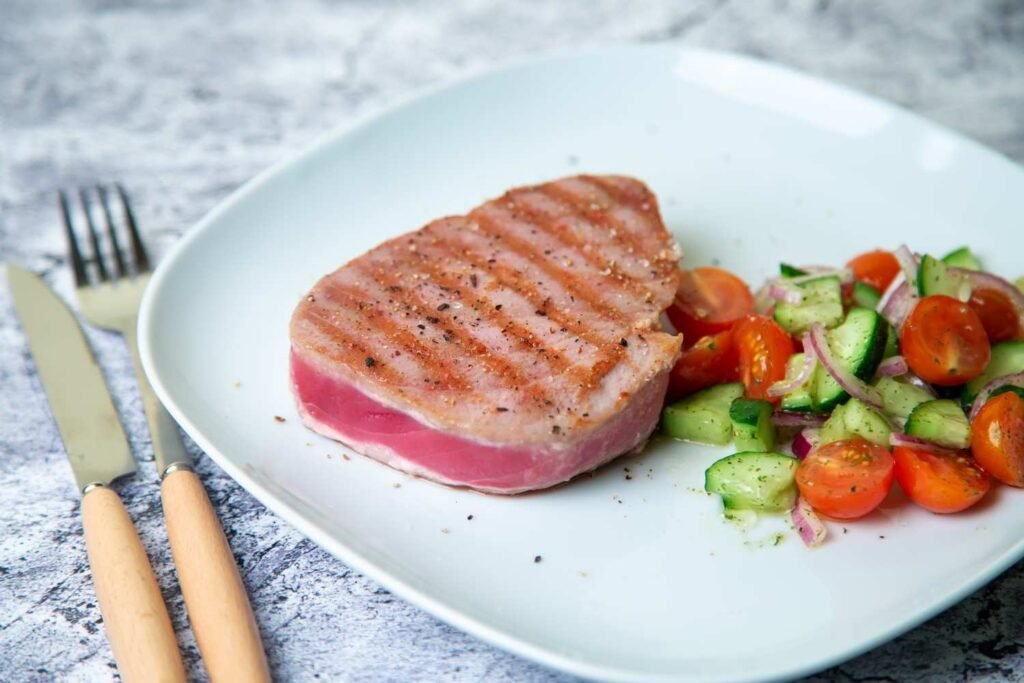
If you’ve ever wanted to recreate restaurant-style seared tuna at home, learning how to cook tuna steak in a pan is the quickest and most reliable way to do it. Tuna is one of the few fish that truly shines when cooked hot and fast, leaving the center rare, tender, and beautifully red or pink. The best part is that it takes just a few minutes, even for beginners, as long as you understand the heat, timing, and technique.
With the right cut of tuna and a properly preheated pan, you can achieve that crisp, caramelized crust you usually only see at upscale restaurants. In this guide, I’ll walk you through every step, choosing the right tuna, preparing it correctly, achieving that golden crust, avoiding dryness, and serving it like a chef. Let’s get into it.
Why Pan-Searing Is the Best Method for Tuna Steak
Pan-searing is the ideal method because it gives you two things tuna loves: high heat and short cooking time. Unlike most fish, tuna has a denser, steak-like texture and very little fat. That means when you overcook it, the moisture disappears quickly. A hot pan allows you to form a flavorful crust without cooking the interior beyond rare or medium-rare, which preserves the natural buttery flavor.
Choosing the Right Tuna Steak
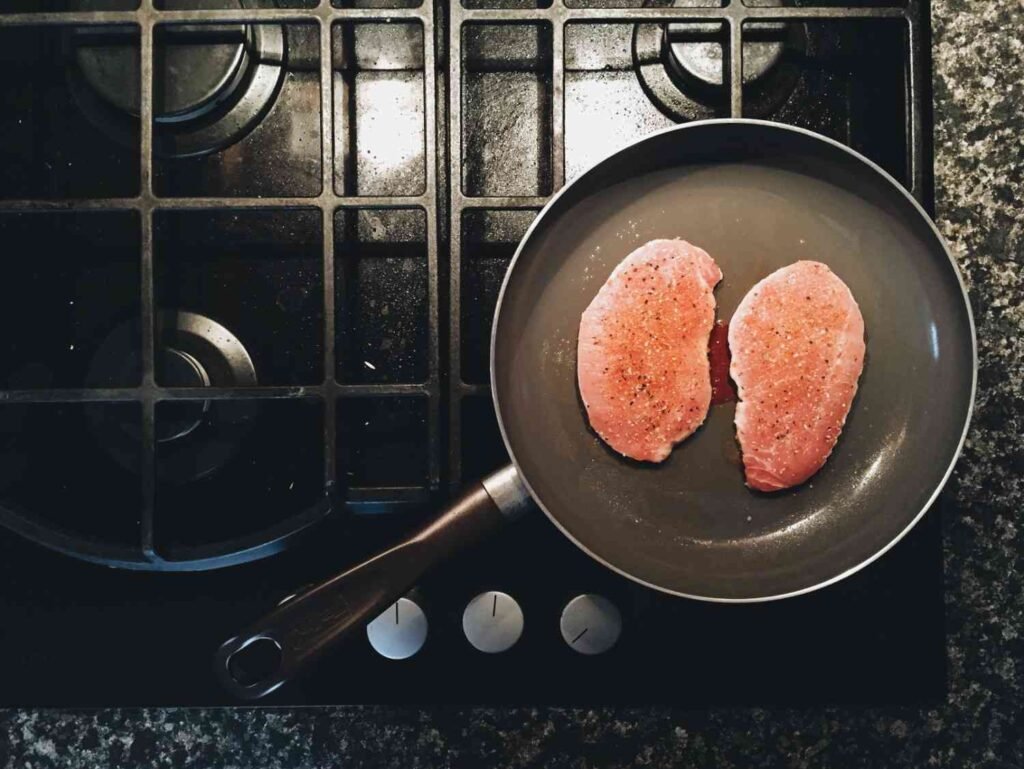
The quality of your tuna determines everything—from flavor to texture to safety. Here’s what to look for:
- Sushi-grade tuna is best, especially if you want a rare center.
- Choose steaks at least 1 inch thick for better temperature control.
- Look for vibrant red or pink flesh with no brown or gray patches.
- The smell should be clean, mild, and ocean-like—not fishy.
Types of tuna suitable for pan-searing:
- Yellowfin (Ahi)
- Bigeye
- Bluefin (fattier, premium choice)
Essential Tools and Ingredients
You don’t need much, but the right tools make all the difference.
Tools
- Cast-iron or heavy-bottom stainless steel pan
- Instant-read thermometer
- Tongs
- Paper towels
Ingredients
- Tuna steaks
- Salt and black pepper
- High–smoke-point oil (canola, avocado, grapeseed, or light olive oil)
- Optional flavor add-ins: butter, garlic cloves, sesame seeds, fresh herbs, spice rubs
Prep Steps Before Cooking
A perfect sear starts long before the tuna hits the pan.
1. Pat the Tuna Completely Dry
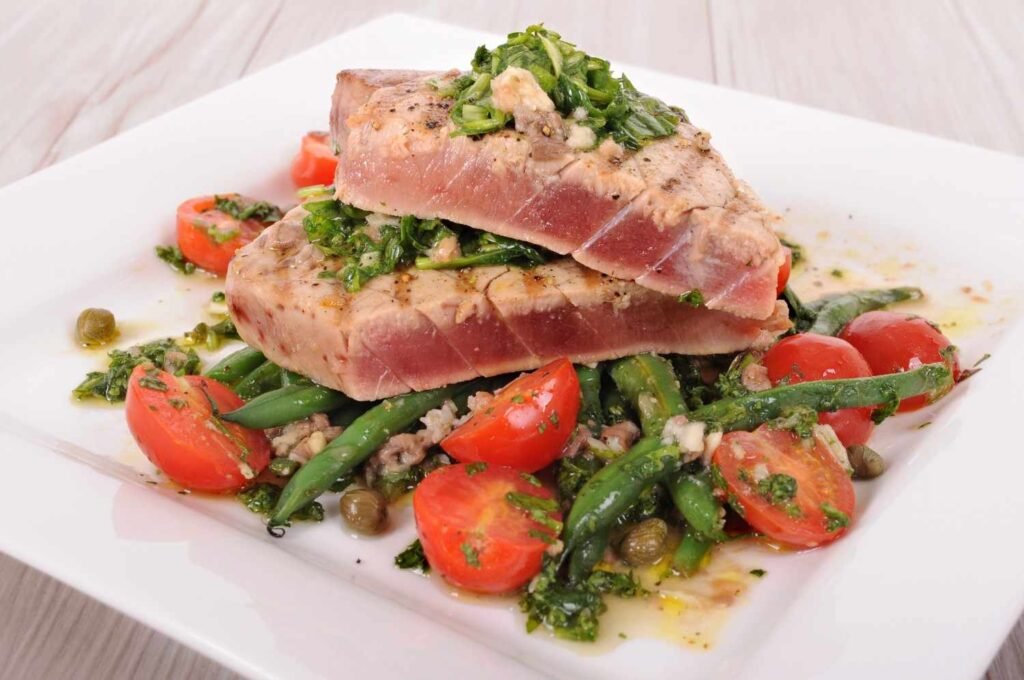
Moisture prevents browning. Use several paper towels to dry all sides.
2. Season Generously
At minimum, use salt and black pepper.
You can also try:
- Sesame seed crust
- Cracked pepper rub
- Garlic and herb seasoning
- Chili powder or paprika for heat
- Short marinades (15–20 minutes max)
3. Oil the Fish, Not the Pan (Optional Advanced Tip)
Coating the tuna lightly in oil can help form a more even crust.
How to Cook Tuna Steak in a Pan: Step-by-Step Instructions
This is the part that matters most—the actual sear.
1. Heat the Pan Until Very Hot
Place a cast-iron or stainless steel pan over medium-high to high heat.
Aim for 425–450°F (218–232°C) if measuring.
A properly heated pan will:
- Sear instantly
- Prevent sticking
- Keep the center rare
2. Add Oil
Add 1–2 tablespoons of a high-smoke-point oil.
If you like, add a small pat of butter and a few crushed garlic cloves for flavor.
3. Sear the Tuna
Place the tuna gently into the pan. You should hear an immediate sizzle.
Cook using the timing below:
| Doneness Level | Time Per Side | Internal Temp |
| Rare | 1–1.5 minutes | 115–120°F |
| Medium-Rare | 1.5–2 minutes | 125–130°F |
| Medium | 2.5–3 minutes | 135–140°F |
Chef’s note: Going beyond medium will result in dry, gray tuna.
4. Flip Once
Tuna should only be flipped once to maintain the crust.
Use tongs and lift gently.
5. Check the Temperature
Use an instant-read thermometer if you want perfection.
Remember: the fish will continue cooking for a minute or two after being removed from the heat.
6. Rest Before Slicing
Rest the tuna for 2–3 minutes so the juices redistribute.
7. Slice Against the Grain
Cut into thin slices (¼ inch thick) for the best texture and presentation.
Flavor Variations You’ll Love
There are endless ways to build flavor around tuna. Here are a few reliable combinations:
Asian-Inspired
- Soy sauce
- Sesame oil
- Ginger
- Mirin
- Toasted sesame seeds
Mediterranean
- Lemon
- Olive oil
- Rosemary
- Garlic
- Cracked pepper
Spicy Rub
- Paprika
- Cayenne
- Coriander
- Black pepper
Citrus-Herb Finishing
- Lemon zest
- Parsley
- Dill
- Garlic butter
Quick Sides That Pair Perfectly with Pan-Seared Tuna
Tuna steak goes well with fresh, light, or citrus-driven sides.
- Steamed jasmine rice
- Stir-fried vegetables
- Seaweed salad
- Garlic mashed potatoes
- Avocado mango salsa
- Roasted asparagus
- Simple green salad with lemon vinaigrette
Common Mistakes and How to Avoid Them
Mistake 1: Overcooking the Tuna
This is the most common problem.
Solution: Cook rare to medium-rare unless the tuna is not sushi-grade.
Mistake 2: Using a Warm Pan
A warm or medium-heat pan causes sticking and no crust.
Solution: Preheat until very hot.
Mistake 3: Moving the Tuna Too Much
Let it sit to sear properly.
Mistake 4: Over-marinating
More than 20 minutes breaks down the texture.
Mistake 5: Thin Tuna Steaks
Thin steaks cook through too quickly.
Use 1–1.5 inch thick steaks for best results.
Pan-Seared Tuna Steak: Time and Temperature Comparison
Here’s a quick reference for your cooking process:
| Cooking Preference | Texture | Color Inside | Temp | Time |
| Rare | Tender, cool | Deep red | 115–120°F | 1–1.5 min/side |
| Medium-Rare | Warm + tender | Pink-red | 125–130°F | 1.5–2 min/side |
| Medium | Firmer | Light pink | 135–140°F | 2.5–3 min/side |
Frequently Asked Questions
1. Should tuna steak be cooked all the way through?
No. Tuna is best enjoyed rare or medium-rare. Fully cooking it makes it dry and firm. The only exception is when the tuna is not sushi-grade; in that case, cook it to at least medium.
2. Do you need to marinate tuna steak before pan-searing?
No, but a short 15–20 minute marinade can add flavor. Avoid long marinades because acid will begin to cook the surface of the tuna.
3. What oil is best for searing tuna?
Use oils with high smoke points like avocado oil, canola oil, grapeseed oil, or refined olive oil. Regular extra virgin olive oil smokes too quickly.
4. Can you cook frozen tuna steaks in a pan?
Yes, but thaw them fully before cooking for better control and browning. Frozen tuna cooked directly in the pan tends to release water and won’t sear well.
5. How do you know when tuna steak is done?
The exterior should be browned, and the center should be red or pink depending on your preferred doneness. For accuracy, use a thermometer:
Rare: 115–120°F Medium-rare: 125–130°F
6. Is pan-seared tuna safe to eat rare?
Yes, as long as you’re using sushi-grade tuna or fish that has been properly frozen to kill parasites.
Final Thoughts
Learning how to cook tuna steak in a pan is one of the easiest ways to elevate your home cooking. With high heat, minimal cooking time, and quality tuna, you can create a restaurant-level dish in minutes. Stick to thick, fresh steaks, avoid overcooking, and experiment with simple flavor variations. Once you master the sear, tuna becomes one of the most rewarding proteins to cook at home.