 Ethan Vance
Dogs lick their paws for many reasons, from normal grooming to medical or behavioral causes. While occasional licking is harmless, frequent, obsessive, or prolonged licking almost always points to an underlying issue. It can be your dog’s way of signaling discomfort, itchiness, or even emotional stress. Many pet owners overlook this behavior until it becomes excessive, but early attention can prevent infections and more serious complications.
Understanding the root cause is crucial, because treating only the symptoms rarely solves the problem. By paying close attention to your dog’s habits and physical signs, you can respond proactively rather than reactively. In this guide, I’ll break down the real reasons dogs do this, how to tell if it’s serious, what you can do at home, and when to call a veterinarian.
What’s Normal vs Concerning Paw Licking?
Normal licking:
- Short grooming sessions
- Happens occasionally
- Dog licks both paws equally
- No irritation afterward
Concerning licking:
- Persistent or obsessive licking
- Focus on one paw or one spot
- Signs of redness, odor, or swelling
- Licking that interrupts sleep or activity
The Most Common Causes of Paw Licking
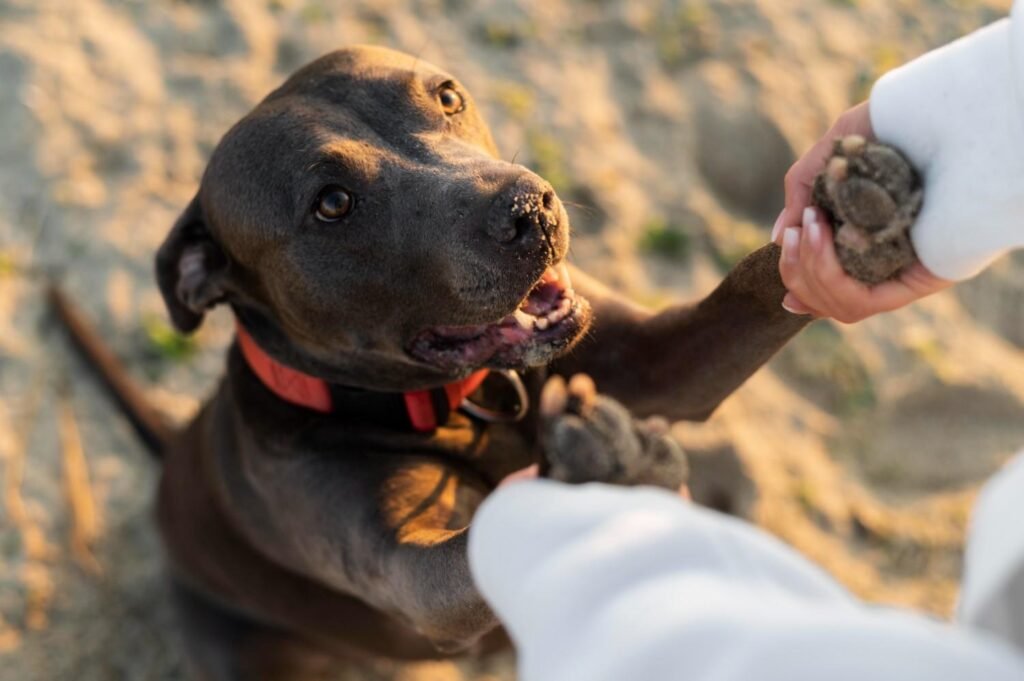
1. Allergies and Skin Sensitivities
This is the number one reason dogs lick their paws. Allergies can be triggered by:
- Environmental allergens: pollen, grass, mold, dust mites
- Food allergens: common proteins such as chicken, beef, dairy, soy
- Contact irritants: floor cleaners, detergents, lawn chemicals
How it looks: red, itchy paws, frequent licking, sometimes hair loss between toes.
2. Pain or Injury
If a dog is licking one specific paw, there may be:
- A thorn or splinter
- A stinger or insect bite
- A cut or scrape
- A cracked or broken nail
- Burn from hot pavement
Sometimes licking is caused by non-visible pain such as joint pain, arthritis, or an injury higher up the leg.
3. Bacterial or Yeast Infection
Persistent moisture from licking creates ideal conditions for infection.
Signs include:
- Strong foul odor
- Dark discoloration between toes
- Yellowish or brown staining from saliva
- Redness or oozing
Dogs with floppy ears or sensitive skin are more prone to yeast overgrowth.
4. Parasites
- Fleas
- Ticks
- Mites (including mange)
These parasites cause intense itching, often leading to constant paw chewing or licking.
5. Anxiety, Stress, or Boredom
Some dogs use licking as a coping mechanism. It releases endorphins that temporarily calm them. Causes include:
- Separation anxiety
- Loneliness
- Lack of stimulation
- Changes in routine
- Loud noises
- New environments
This can become a compulsive behavior over time.
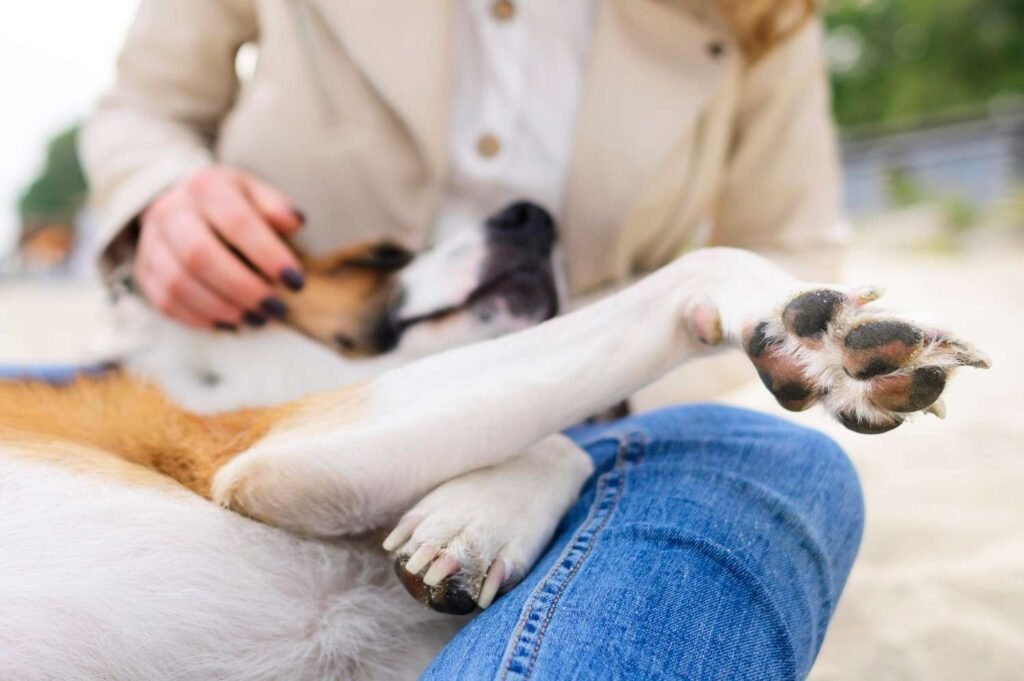
6. Dry or Irritated Skin
Dry weather, frequent bathing, and cold air strip natural oils from a dog’s paw pads.
Common symptoms:
- Flaky skin
- Cracks on paw pads
- Dull coat
- Increased licking in winter months
Quick Comparison: Medical vs Behavioral Causes
| Category | What Causes It | Signs You’ll Notice | Example Solution |
| Medical | Allergies, infections, parasites, injury | Redness, odor, swelling, one-paw licking | Vet diagnosis, allergy treatment, medication |
| Environmental | Chemicals, pollen, road salt, grass | Licks after walks, seasonal symptoms | Paw washing, wiping after walks |
| Behavioral | Anxiety, boredom, compulsive habits | Licks even when paws look normal | Mental stimulation, enrichment, training |
| Dry skin | Weather, over-bathing, dehydration | Cracked pads, flaky skin | Paw balms, omega oils, humidity |
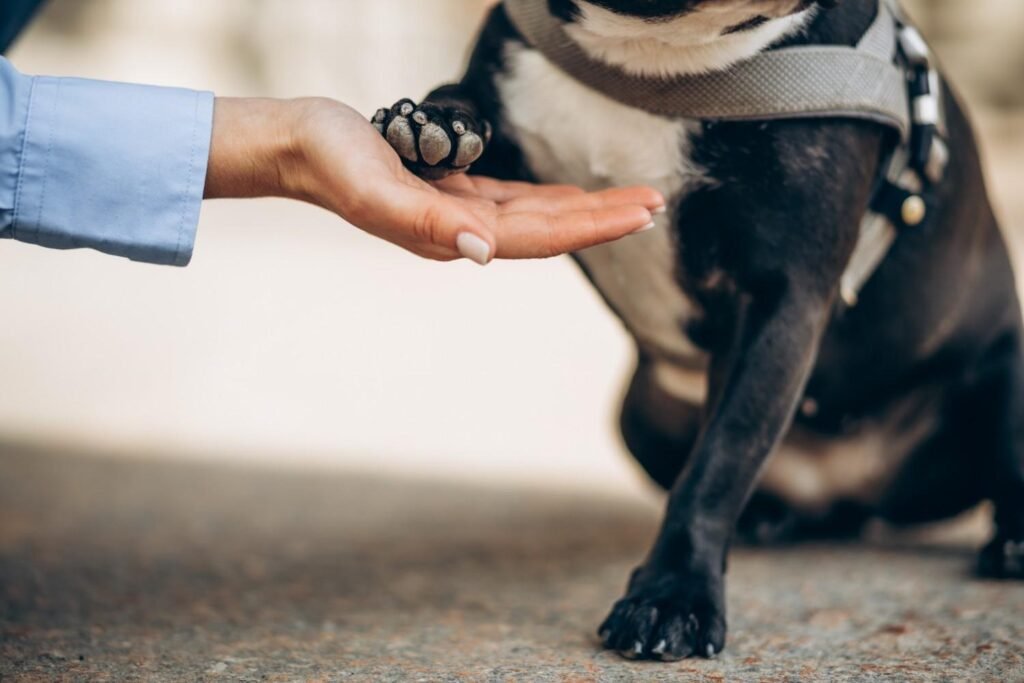
How to Inspect Your Dog’s Paws at Home
Do this in good lighting:
- Check between the toes
- Look at each nail and nail bed
- Inspect paw pads for cracks or burns
- Examine for grass seeds, splinters, or tiny punctures
- Smell the paws for odor (yeast smell is common)
If your dog yelps or pulls back, that may indicate pain.
When to See a Veterinarian
If you notice any of the following, seek professional care:
- Redness, swelling, or bleeding
- A strong or unusual smell
- Open sores or scabs
- Excessive hair loss around paws
- Limping or reluctance to walk
- Licking that disrupts sleep or normal activities
What You Can Do at Home (Safe Solutions)
Regular Paw Cleaning
- Rinse paws after walks
- Wipe with mild pet-safe wipes
- Avoid harsh disinfectants on floors
Condition and Moisturize
Use a dog-safe paw balm if pads appear dry.
Improve Diet
Omega-3 fatty acids (from fish oil) help reduce inflammation and support skin health.
Reduce Stress
- Provide enrichment toys
- Increase exercise
- Offer puzzle feeders
- Maintain predictable routines
Allergy Management
For suspected allergies:
- Discuss an elimination diet with a vet
- Consider hypoallergenic food
- Track environmental triggers (grass, spring pollen, etc.)
Important: Avoid These Common Mistakes
- Do not apply human creams like Neosporin or cortisone
- Do not use essential oils on paws
- Do not wrap the paw constantly—it traps moisture
- Do not ignore persistent licking
Frequently Asked Questions
1. Why do dogs lick their paws at night?
Nighttime is quiet and calm—without distractions. An itchy or irritated paw becomes more noticeable, so the dog focuses on licking. This can signal allergies or skin irritation.
2. Why do dogs lick only one paw?
When licking is localized, the cause is usually injury, a foreign object, or localized infection. Always inspect the paw carefully and consult a vet if symptoms continue.
3. Can food allergies cause paw licking?
Yes. Food allergies—especially to proteins like chicken, beef, or dairy—often appear as paw licking and itchiness rather than stomach issues.
4. Is paw licking ever completely harmless?
Yes, light occasional licking is normal grooming. It becomes a problem only when it becomes frequent or obsessive.
Final Thoughts: Understanding Your Dog’s Behavior
The question “why do dogs lick their paws?” rarely has one simple answer. Sometimes it’s just normal grooming—but often, it’s your dog’s way of signaling that something is wrong, whether that’s itchiness from allergies, discomfort from injury, anxiety, or even a developing infection. Excessive licking can also create moisture that leads to secondary skin problems, making early attention especially important.
Observing their behavior patterns and checking for redness, swelling, or odor can help you catch issues before they escalate. The best approach is to observe, inspect, and, if needed, consult a veterinarian to ensure your dog stays healthy, comfortable, and happy.