
 Ethan Vance
The journey of childhood is filled with new experiences, many of which present hurdles that require tenacity and adaptability. Raising a child who views these obstacles not as endpoints, but as exciting opportunities for growth, is one of the most valuable gifts a parent or guardian can bestow.
This involves deliberately cultivating a mindset rooted in curiosity, resilience, and the understanding that abilities are not fixed, but expandable through dedication.
Cultivating a Growth Mindset

A growth mindset is the foundation upon which a love for learning and challenge is built. It is the belief that intelligence and talent are not inherent traits that dictate destiny, but rather tools that can be sharpened through sustained effort and effective strategy.
Focus on Effort, Not Outcome
When praising a child, shift the emphasis from the result to the process. Instead of simply saying, “You are so smart,” try, “You worked incredibly hard on that puzzle, and your persistence paid off.” This type of specific, descriptive praise reinforces the value of diligence and problem-solving.
When a task is difficult, introduce the concept of “yet.” If a child states, “I cannot do this,” respond with, “You cannot do this yet.” This small linguistic alteration transforms a statement of permanent limitation into one of temporary setback and future potential. It teaches them that competence is a trajectory, not a status quo.
Reframe Mistakes as Opportunities
Failure is an indispensable component of learning. Children need to understand that making errors is not a sign of deficiency, but rather crucial feedback that illuminates the path forward. When a child makes a mistake, avoid frustration or blame.
Instead, treat it as a subject for collaborative analysis. Ask questions like, “What did we learn from this attempt?” or “What might we try differently next time?” This neutral approach strips the mistake of its emotional sting and transforms it into a valuable lesson. It encourages them to experiment fearlessly, knowing that the worst outcome is merely receiving information on what does not work.
Strategies for Building Resilience
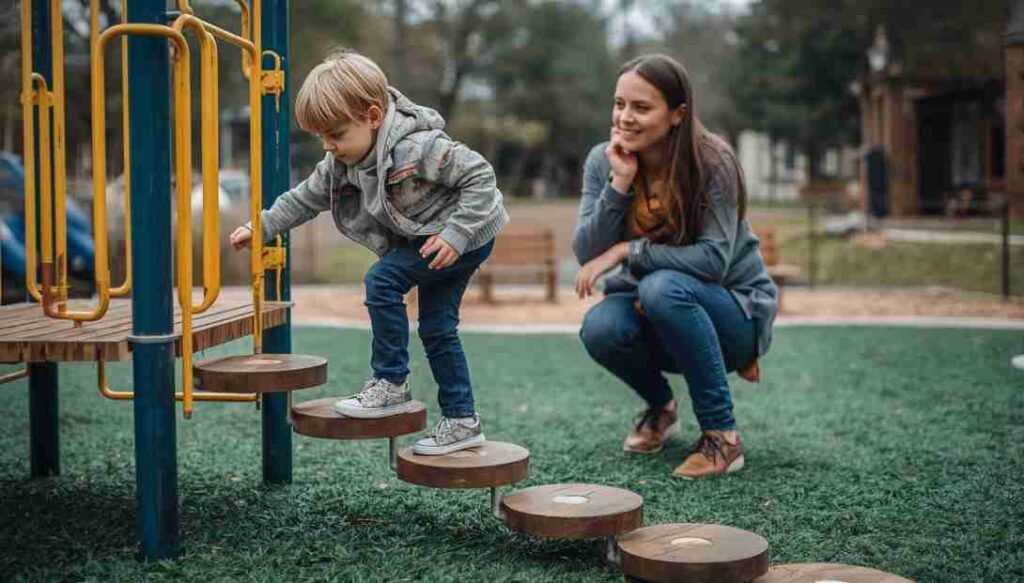
Resilience is the capacity to recover quickly from difficulty. It is the motor that drives a child through challenging learning curves without giving up.
Encourage Calculated Risk-Taking
A common parental instinct is to shield children from potential failure or discomfort. However, true confidence comes from navigating these situations successfully. Encourage your child to step outside their comfort zone, whether it involves trying out for a new activity, making a new friend, or tackling a harder academic subject.
Supportive parenting also means staying calm during serious situations, especially when families face difficult moments in life, where your child is arrested for the first time and needs steady guidance instead of panic.
Start with small, manageable risks and gradually increase the difficulty. The sensation of overcoming a challenge, even a minor one, significantly bolsters their sense of capability and willingness to face future adversity.
Teach Problem-Solving Skills
Do not immediately swoop in to solve every problem your child encounters. When they face a hurdle, prompt them to brainstorm solutions independently. For instance, if a toy is broken, ask, “What are three different ways we could fix this?” or “Who could we ask for assistance?” Providing them with the framework for independent thought allows them to develop critical thinking and self-reliance.
This empowers them to feel competent in their ability to manage unexpected difficulties, which in turn fosters courage when facing complex academic tasks.
The Role of Environment and Support
The environment a child grows up in profoundly influences their willingness to engage with challenges. A supportive atmosphere acts as a psychological safety net.
Children also learn confidence through body awareness and self-acceptance, and understanding that hormones affect your physical appearance can help parents guide sensitive conversations with care and patience.
Create a Safe Space for Failure
Children are more likely to take risks when they know that failure will not be met with ridicule or severe disappointment. Ensure that the home setting celebrates effort and grit above innate talent.
This supportive environment extends to educational settings as well. Parents searching for the right start might consider a local institution; a quality preschool in Sandy can often provide the structured, encouraging environment necessary for children to develop robust social and learning skills outside the home.
Such supportive networks are vital as children navigate their developmental milestones.
Model Positive Self-Talk and Perseverance
Children observe and internalize their caregivers’ reactions to setbacks. When you, as a role model, confront a professional disappointment or a personal difficulty, articulate your process out loud.
Say things like, “That project did not go as planned, but I am going to review what went wrong and try a new approach next week.” By observing you engage in constructive self-talk and demonstrate persistence, they learn the practical application of resilience and how to manage their own internal dialogues when faced with frustrating circumstances.
Practical Communication Techniques

The language used in daily interactions is a powerful tool for shaping a child’s perception of themselves and their capabilities.
Use Specific, Encouraging Praise
Generic praise loses its meaning over time. Be precise in your compliments. Instead of, “Good job,” try, “The way you organized your blocks by color shows careful planning,” or “I appreciate how patiently you waited for your turn; that demonstrates excellent self-control.”
This specificity links the compliment directly to a transferable skill or effort, making the child more aware of the specific behaviors that lead to successful outcomes.
Ask Open-Ended Questions
Engage your child in conversations that require more than a simple yes or no answer. This promotes deeper cognitive processing and reinforces the idea that their thoughts and interpretations matter.
When discussing a book, ask, “Why do you think that character made that particular decision?” When they finish a drawing, ask, “Tell me about the story of this picture.” These inquiries validate their inner world and develop their ability to analyze and articulate complex thoughts, essential skills for tackling abstract challenges in learning.
Fostering a challenge-embracing mindset is a continuous practice. It involves shifting the focus from performance to effort, welcoming mistakes as learning tools, and providing an unwavering structure of support.
By implementing these practical strategies, you equip your child with the psychological fortitude to confidently face whatever complexities the future may hold, transforming them into lifelong learners who thrive on solving problems.