 Ethan Vance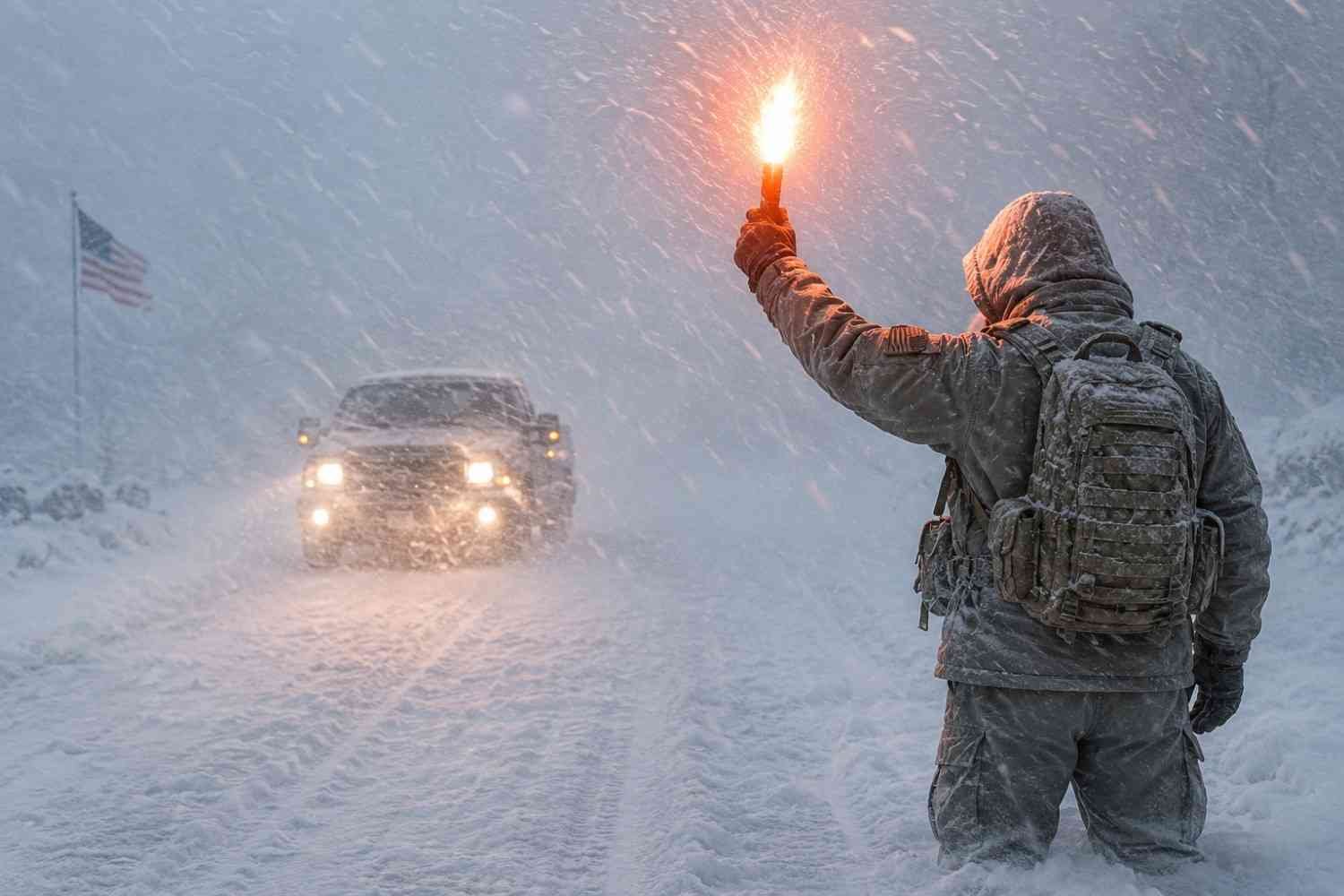
A true winter whiteout is one of the most disorienting conditions a driver or emergency responder can ever face. Within seconds, heavy blowing snow and a featureless landscape merge into a wall of blinding white. The horizon vanishes, depth perception disappears, and surrounding vehicles completely fade from view.
Whether you are operating a snowplow, managing a roadside emergency, or trying to get home safely, your primary goal changes in an instant. It is no longer just about seeing where you are going; it is about ensuring everyone else on the road can see you. Remaining visible in a blizzard requires a deliberate strategy and the right equipment to cut through the frozen chaos.
1. Understanding the Limits of Standard Lighting
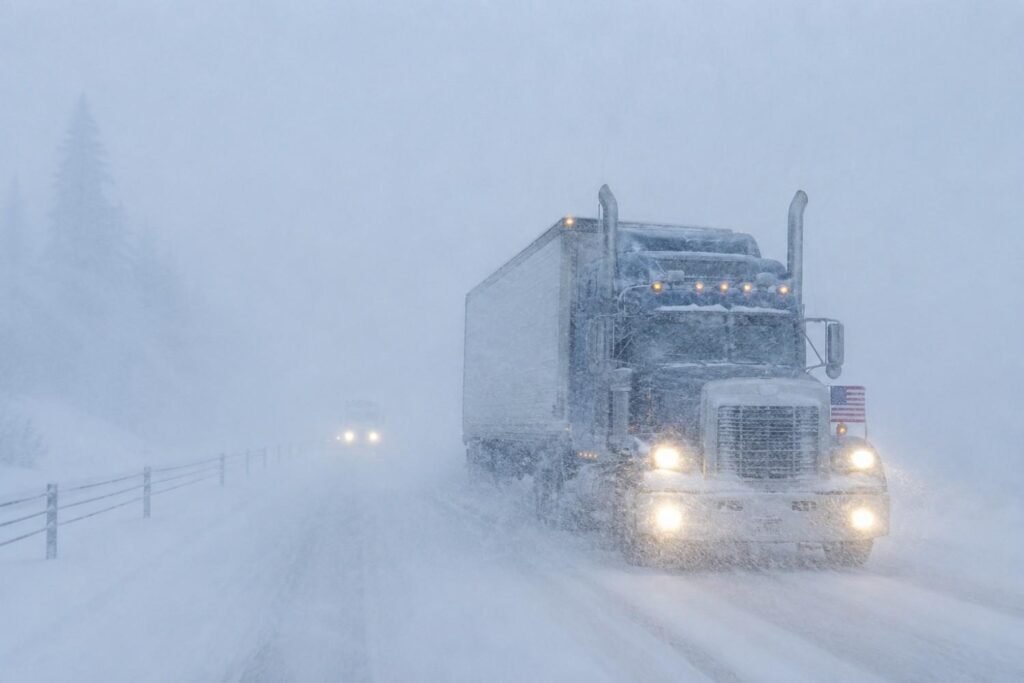
When visibility drops to near zero, the natural reflex for most drivers is to turn on their standard high-beam headlights. Unfortunately, in a heavy snowstorm, this actually makes visibility worse. High beams project light straight ahead, which reflects directly off the airborne snowflakes, damages your car exterior, and creates a blinding glare right back into your eyes.
To stay visible without blinding yourself or others, rely on low beams and specialized fog or warning lights. These systems are positioned lower on the vehicle chassis, casting light underneath the main drift of blowing snow. This positioning illuminates the ground and the vehicle’s footprint rather than illuminating the storm itself.
2. Leveraging the Power of Amber and Green Wavelengths
White light is highly ineffective in a whiteout because it perfectly matches the color of the environment. A white strobe light simply blends into the background of swirling snow, rendering a stationary vehicle virtually invisible until a motorist is just feet away.
To cut through frozen moisture, emergency fleets utilize specific color wavelengths—primarily amber and green. Human eyes are incredibly sensitive to these colors, particularly in low-contrast environments. Amber light possesses a longer wavelength that doesn’t scatter as easily in frozen airborne crystals, making it the gold standard for broadcasting a clear warning through the pale haze.
3. Utilizing Multi-Angle Visual Warning Systems
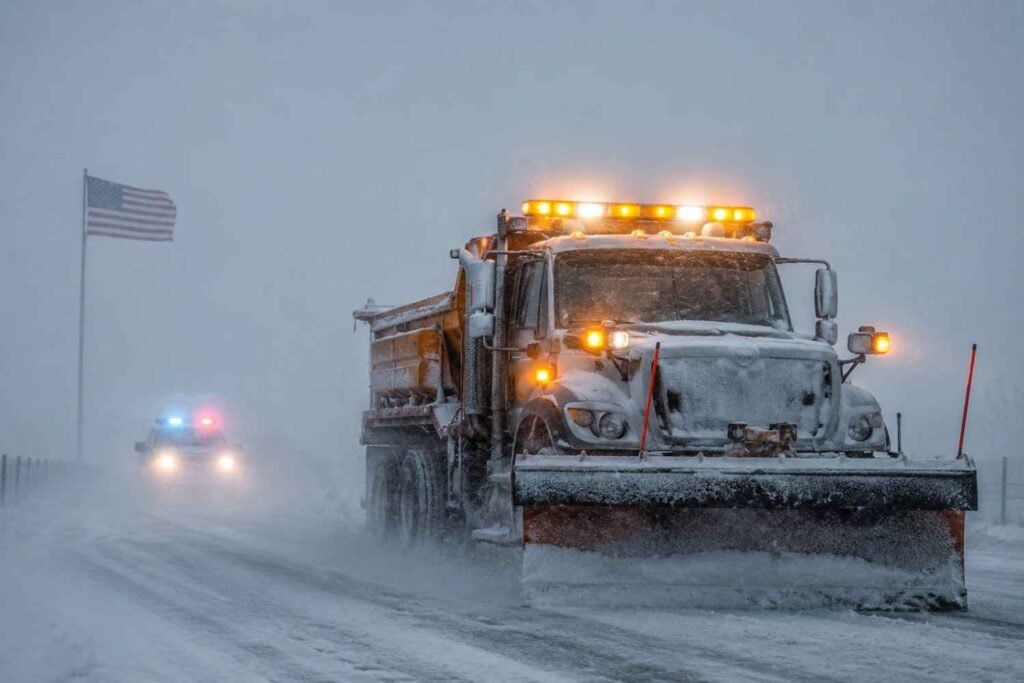
In a severe winter storm, traffic can approach from any direction at unpredictable angles, especially at intersections or when a vehicle is angled across a lane to block a collision site. Having light projected only from your front grill and rear bumper leaves dangerous blind spots.
Achieving true safety requires a 360-degree perimeter of light. Equipping service vehicles with high-intensity light bars for trucks ensures that a powerful, pulsing alert is sent out in every direction simultaneously. A roof-mounted bar elevates the light source above the roofline, allowing the warning signals to clear roadside snowbanks and be seen by distant motorists.
4. Managing Active Snow Accumulation on Lenses
The best lighting system in the world is completely useless if it is buried under a thick layer of packed ice and snow. Modern LED lights are incredibly efficient, but because they produce very little forward heat compared to old incandescent bulbs, they do not automatically melt the snow that accumulates on their lenses.
During an active whiteout, heavy wet snow can quickly cake over your light bars, flashers, and taillights, completely choking out your visual signature. To combat this, look for warning gear equipped with self-heating lenses that automatically activate when temperatures drop below freezing. Alternatively, apply a hydrophobic coating to the lenses before heading out to prevent ice from sticking.
5. Employing Dynamic Flash Patterns for Depth Perception
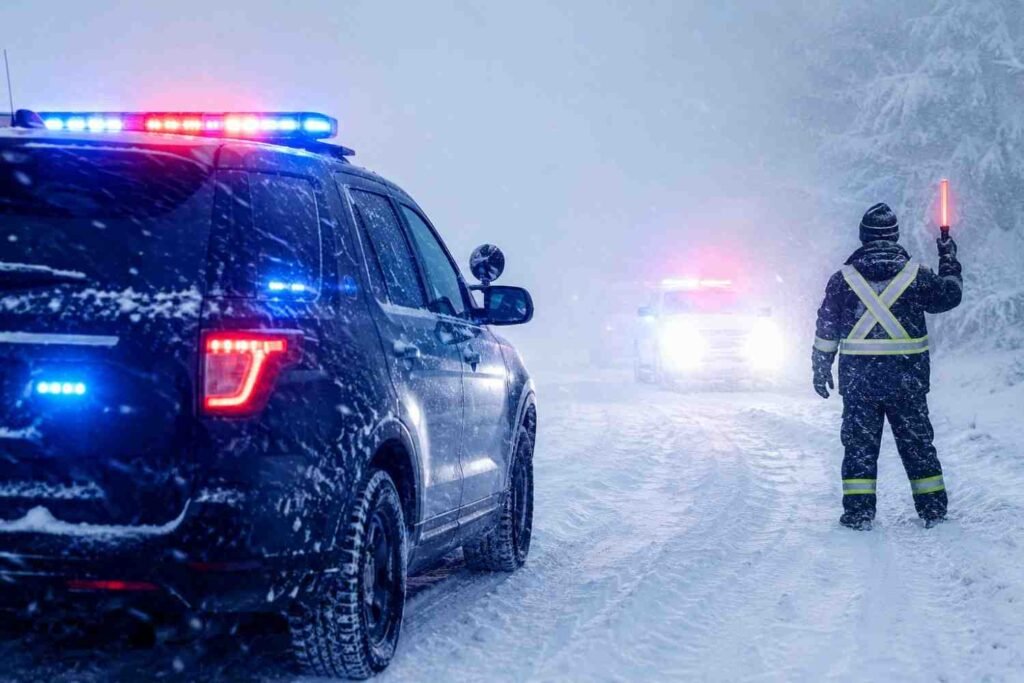
In a featureless white environment, the human brain struggles immensely with depth perception. When a driver sees a faint, steady light through the snow, they cannot accurately judge how fast they are approaching it or if the vehicle is completely stopped on the shoulder.
Dynamic, alternating flash patterns break up the visual monotony of a blizzard. By utilizing synchronization and high-contrast pulsing rhythms, modern emergency lights trigger a faster cognitive response. The shifting light patterns give oncoming drivers the crucial visual data they need to recognize a stationary hazard, calculate the distance accurately, and slow down smoothly.
Conclusion
Surviving and operating in a whiteout comes down to breaking through the visual vacuum created by the storm. Standard factory lights easily fail when the snow begins to pack, making specialized, high-contrast warning visuals an absolute necessity for winter survival. By combining the correct color wavelengths, securing 360-degree coverage, everyday habits and actively keeping lenses clear of ice, you build an unmistakable beacon of safety. When visibility is at its absolute worst, your lighting choices become the definitive lifeline that keeps you from becoming a target in the dark.