 Ethan Vance
Medical facilities handle highly sensitive supplies that require strict storage conditions to remain safe and effective. When medications, biological samples, or sterile equipment are stored improperly, their structural and chemical stability can quickly diminish. This oversight puts patient health at serious risk and creates significant financial losses for healthcare providers.
Maintaining a secure and compliant storage environment involves much more than simply locking a supply room door. Facility managers must actively monitor temperature fluctuations, manage humidity levels, and enforce strict access protocols to meet rigorous regulatory standards. Every environmental and procedural detail matters when preserving the integrity of pharmaceutical products and life-saving medical devices.
This guide covers nine critical safety practices for medical storage. By carefully implementing these strategies, healthcare facilities can protect their valuable inventory, comply with strict industry regulations, and ultimately deliver better care to their patients.
Key Environmental and Procedural Controls
1. Maintain Strict Temperature Controls
Many pharmaceuticals, including vaccines and biologics, require specific temperature ranges to maintain their efficacy. Healthcare facilities must use medical-grade refrigerators and freezers equipped with continuous temperature monitoring systems. Staff should document these temperatures daily and calibrate the monitoring equipment regularly to prevent the degradation of temperature-sensitive medications.
2. Control Moisture and Humidity

Excess ambient humidity can break down the active ingredients in pills, capsules, and powdered medications. High moisture levels also encourage mold growth, which can contaminate sterile packaging. To actively mitigate humidity, facilities routinely place desiccant packs inside packaging or specific storage bins. These moisture-absorbing safeguards help maintain a stable microclimate, ensuring that complex pharmaceutical formulations do not clump or lose their potency.
3. Implement Robust Access Controls
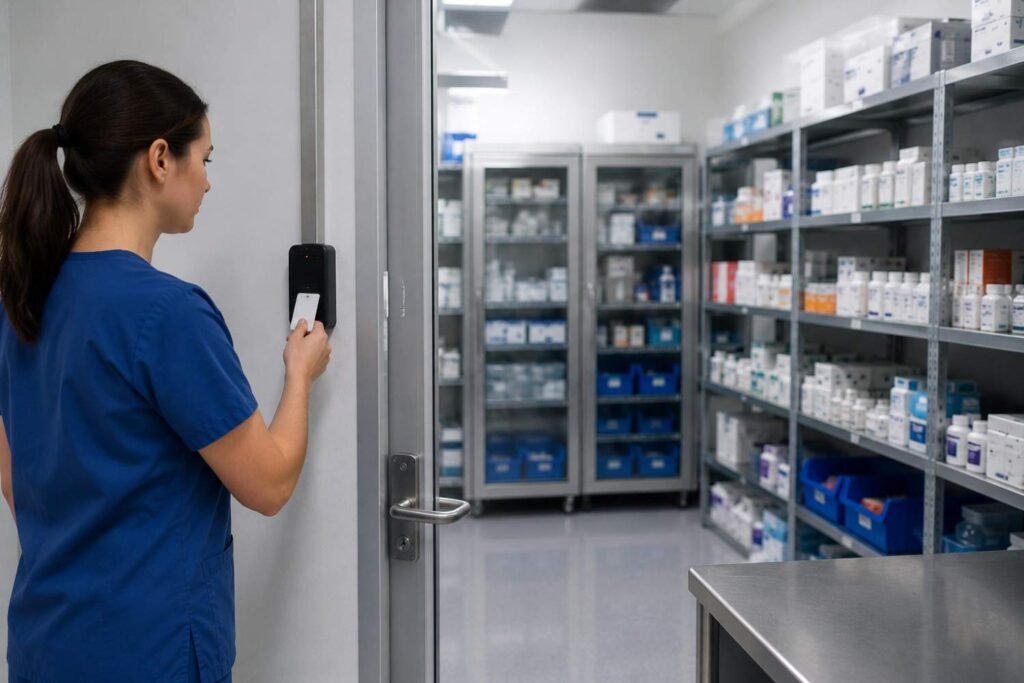
Medical storage areas often contain controlled substances and highly expensive equipment. Restricting access to these areas is a fundamental safety practice. Facilities should use electronic keycards or biometric scanners to ensure only authorized personnel can enter medication rooms. This creates an automatic digital log of who accessed the room and when, deterring theft and reducing the risk of tampering.
4. Standardize Labeling and Organization
A cluttered storage room leads to critical medication errors. Facilities should implement a standardized labeling system featuring high-contrast text and barcode integration. Furthermore, organizing inventory using the First-In, First-Out (FIFO) method ensures that older stock is used before newer shipments. This logical arrangement minimizes waste and prevents staff from accidentally administering expired medications.
5. Conduct Regular Inventory Audits
Routine audits act as a vital safety net for medical storage. By conducting physical inventory counts on a weekly or monthly basis, staff can identify discrepancies between digital records and actual stock. These audits provide a dedicated opportunity to physically inspect packaging for damage, remove expired items from circulation, and verify that all products are resting in their correct designated locations.
6. Ensure Proper Ventilation and Lighting
Stagnant air and poor visibility create a hazardous storage environment. Medical supply rooms require strong, consistent ventilation to prevent the buildup of airborne contaminants and chemical fumes. Additionally, bright and even lighting is necessary so staff can accurately read small dosage information on medication vials, significantly reducing the likelihood of picking errors during high-stress situations.
7. Segregate Hazardous Materials
Medical facilities utilize a variety of toxic, corrosive, or flammable chemicals. These hazardous materials must never be stored alongside standard medical supplies or patient medications. Proper segregation involves using dedicated, fire-resistant cabinets for flammable liquids and clearly marked bins for cytotoxic drugs. Keeping these materials isolated prevents dangerous chemical reactions and accidental cross-contamination.
8. Prepare for Power Outages
A sudden loss of electricity can destroy thousands of dollars worth of refrigerated medications in a matter of hours. Every medical storage facility needs a robust emergency preparedness plan, which includes tying all medical-grade refrigerators and freezers to a reliable backup generator. Facilities should test these generators monthly to ensure they will activate instantly during a grid failure.
9. Prioritize Staff Training
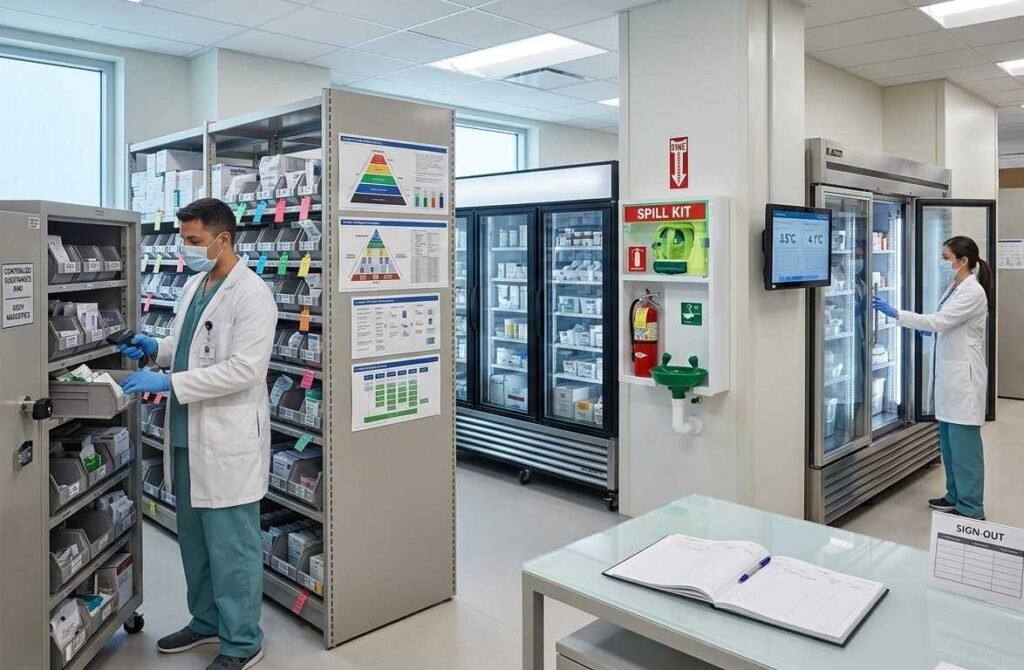
Even the most advanced storage technology is useless if the staff does not understand how to use it. Healthcare administrators must provide comprehensive training on storage protocols during the onboarding process and mandate annual refresher courses. When employees clearly understand the reasoning behind cold chain management and access controls, they are far more likely to adhere strictly to safety guidelines.